Egon
Rasmus Karlström
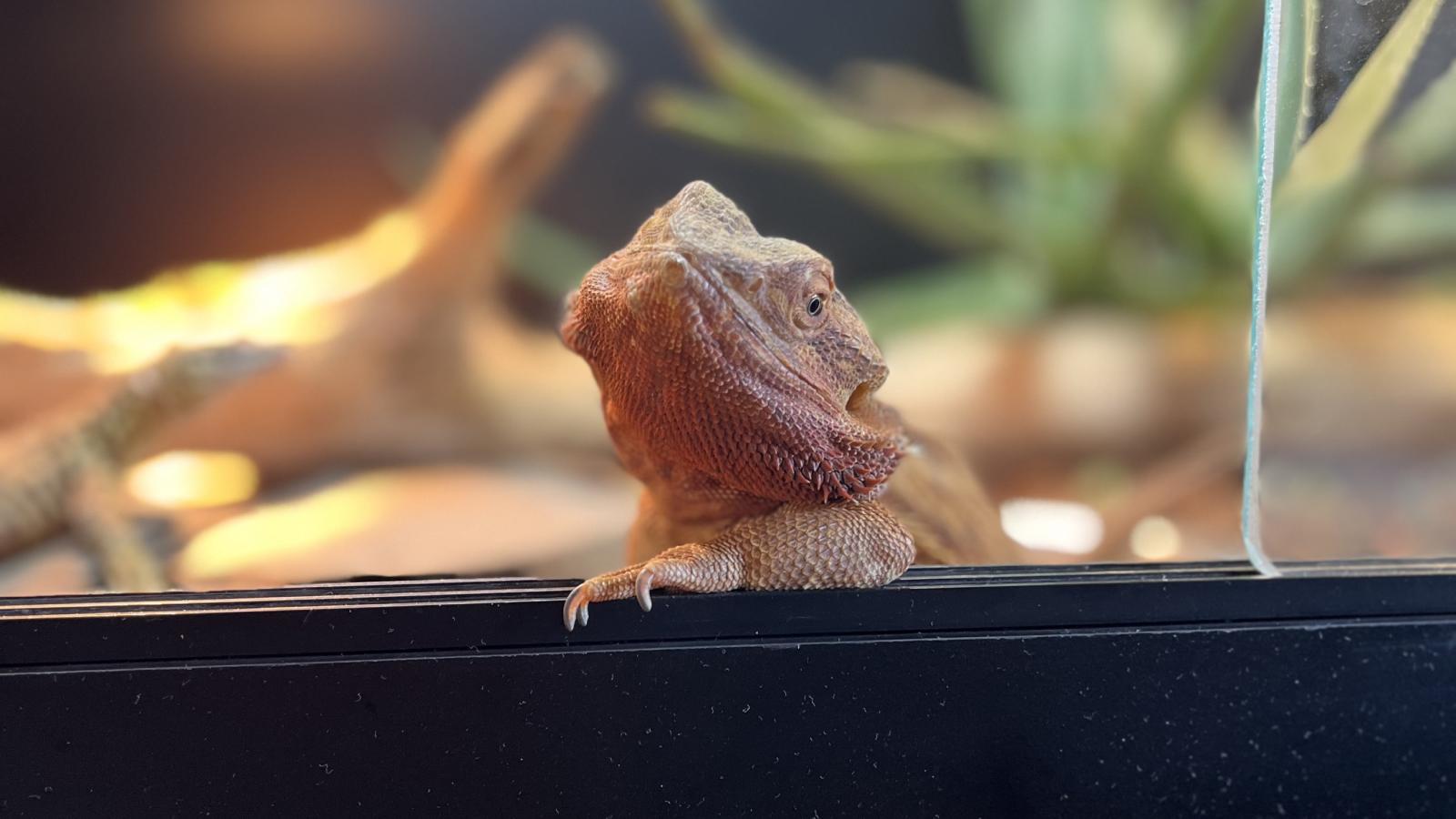
Pogona vitticeps
Key traits and size details for Bearded Dragon.
Length
Weight
Lifespan
A diurnal, semiarboreal Australian agamid that basks in open positions and uses its expandable beard and body postures in social displays.
Native and introduced range details for Bearded Dragon.
Explore the highlighted native and introduced range for this species. Hover or tap a country to inspect it on the map.
Eastern and central Australia.
22-42 C
Temperature range
30-40%
Humidity range
Reference size-over-age data for Bearded Dragon.
Species reference size over age, built from curated catalog points rather than an individual reptile record.
Add at least two length or weight points to plot a species reference curve.
Housing, feeding, and handling guidance collected in one place.
For one adult, provide a secure, ventilated vivarium at least 120 cm long, 60 cm deep and 60 cm high. Include climbing branches or stones, a hide at each end, and a suitable place to dig.
Provide a temperature gradient with a basking zone at 38–42°C and a shaded cool end at 22–26°C. Use a thermostat with each heat source and check both ends daily with thermometers.
Provide a UVB gradient measured at the animal’s level: UVI 3–5 in the basking zone and zero in the shade. Provide lower UV exposure for morphs that require it. Guard lamps and switch all lights off at night.
Measure humidity at the cool end and maintain approximately 30–40%; improve ventilation if it rises above the recommended range.
Opportunistic omnivore eating plant matter and invertebrates; diet varies with age.
Offer a varied mix of safe greens and appropriately sized live invertebrates. Young dragons need a higher proportion of insects; older dragons need a higher proportion of greens. Gut-load feeder insects and remove uneaten livefood.
Keep clean fresh water available in a shallow dish at the cool end; replace it daily and whenever soiled.
Approach without startling the dragon and scoop it up with both hands supporting all four legs. If it retreats or threatens to bite, leave it and try another time.
House bearded dragons separately to prevent territorial fighting and injury.
Approved catalog and community photos for Bearded Dragon.
Community contribution
Browse approved catalog images and community-submitted reptile photos for Bearded Dragon. Community images retain contributor attribution in both the gallery and expanded view.
Create a free account to save these preferences across devices.
Units
Appearance