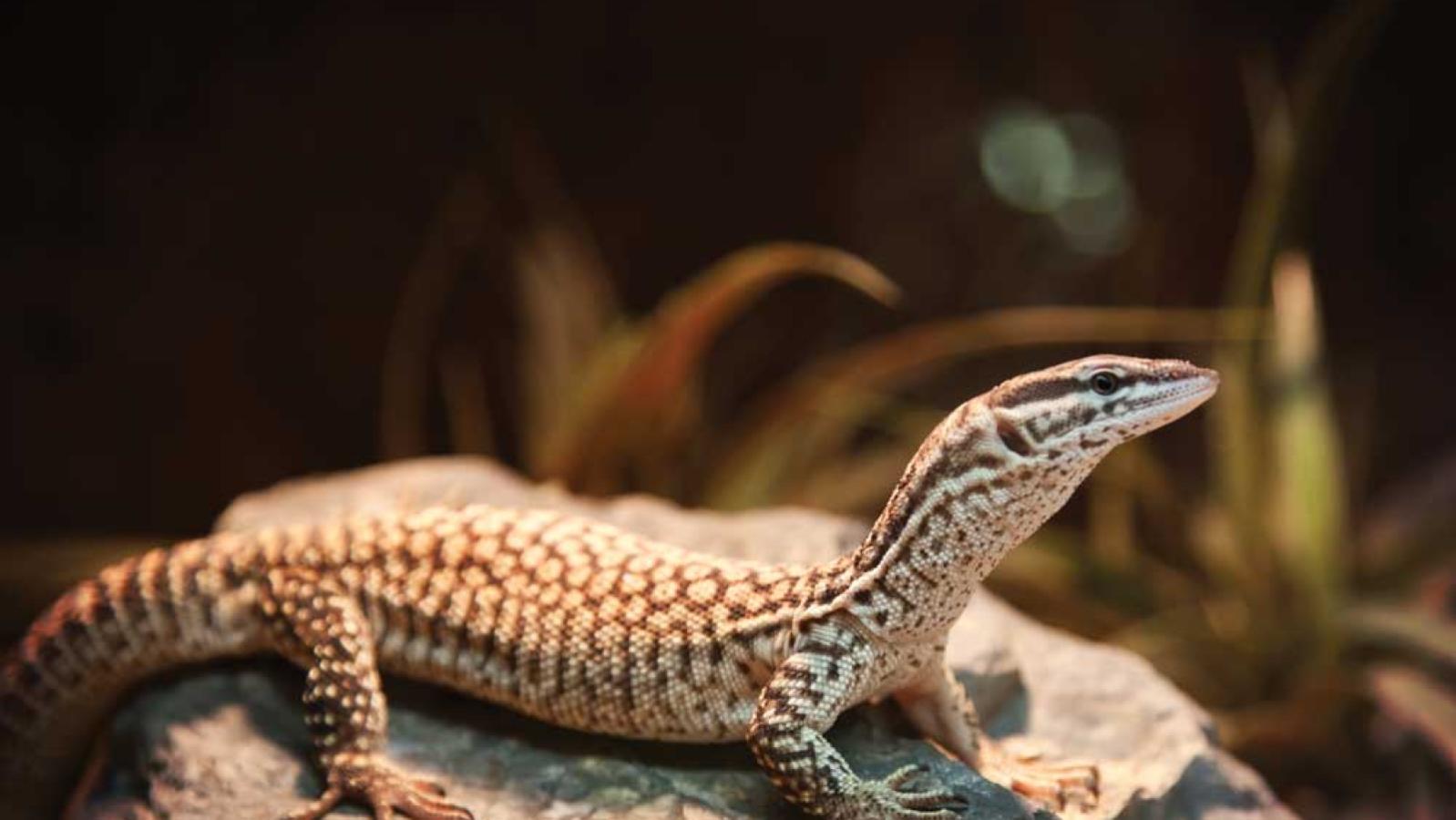
Varanus acanthurus
Key traits and size details for Ackie Monitor.
Length
Weight
Lifespan
Small Australian monitor lizard also known as the spiny-tailed or ridge-tailed monitor; adults reach about 70 cm total length.
Native and introduced range details for Ackie Monitor.
Explore the highlighted native and introduced range for this species. Hover or tap a country to inspect it on the map.
Northern Western Australia, the Northern Territory and northwestern Queensland.
No sourced temperature range yet.
50-80%
Humidity range
Veterinary husbandry guidance distinguishes ambient air of about 80-85°F (27-29°C) from a basking-surface gradient of 120-150°F (49-66°C); provide UV lighting and humid burrow microclimates.
Reference size-over-age data for Ackie Monitor.
Species reference size over age, built from curated catalog points rather than an individual reptile record.
Add at least two length or weight points to plot a species reference curve.
Housing, feeding, and handling guidance collected in one place.
Provide a spacious enclosure with climbing structures, multiple hides and a burrowing area. A reptile veterinarian recommends at least 1 ft (30 cm) of diggable substrate, throughout the enclosure or in a dig box.
Provide a thermal gradient: veterinary guidance gives 80-85°F (27-29°C) ambient air and 120-150°F (49-66°C) basking surfaces. Measure basking surfaces with an infrared thermometer, and provide UV lighting plus shaded retreats.
Predominantly insects, including grasshoppers, cockroaches and beetles; small lizards are also taken in the wild.
Offer a varied diet based mainly on appropriately sized insects such as grasshoppers, cockroaches, beetles and crickets. Gut-load and supplement insects according to reptile-veterinary advice; avoid routinely using fatty whole-prey substitutes.
Allow the animal to settle and build trust gradually. Let it approach voluntarily, support it securely, and stop if it retreats or shows stress.
Approved catalog and community photos for Ackie Monitor.
Catalog image
Browse approved catalog images and community-submitted reptile photos for Ackie Monitor. Community images retain contributor attribution in both the gallery and expanded view.
Create a free account to save these preferences across devices.
Units
Appearance