Smiley
Alexis
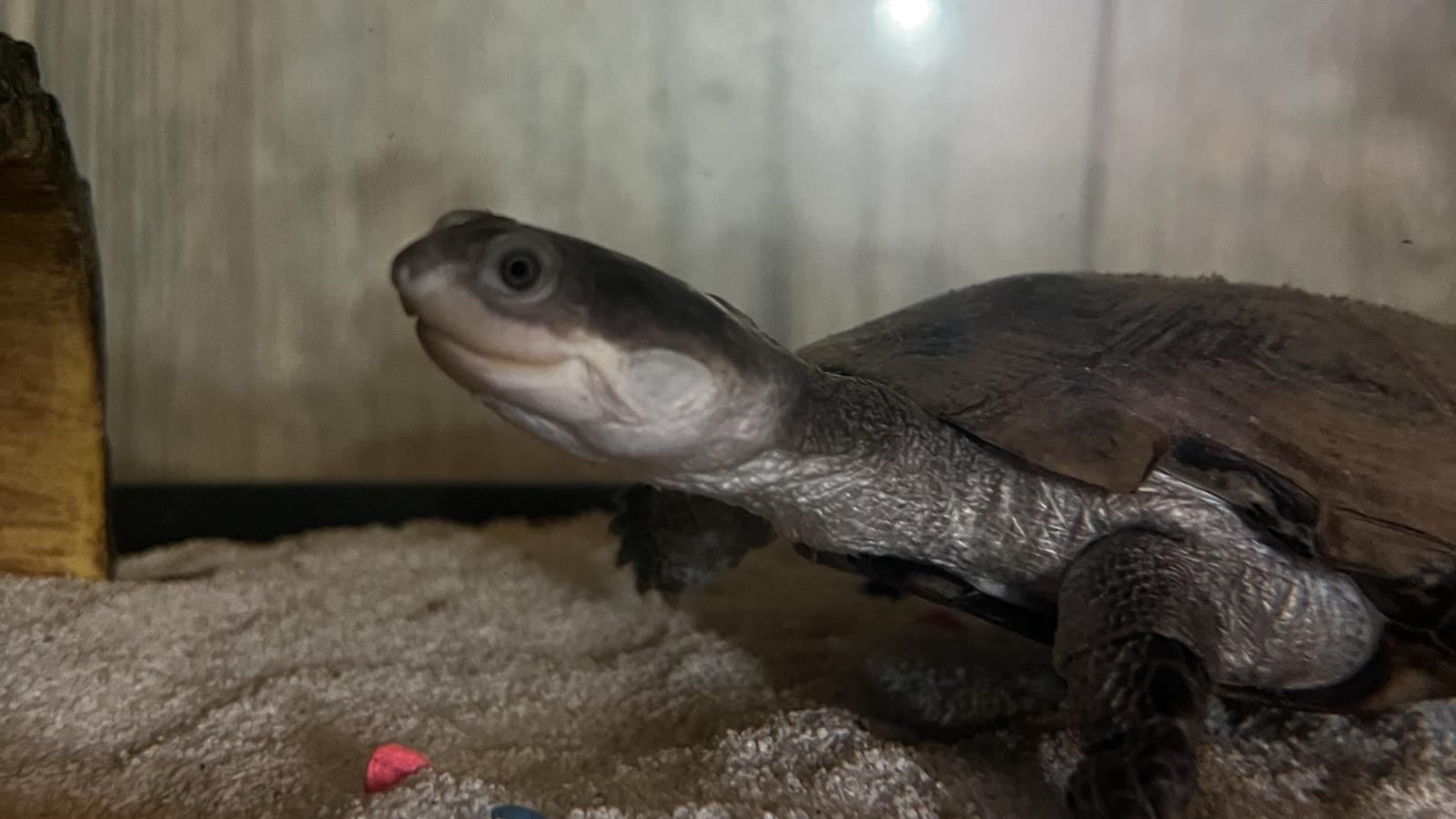
Pelomedusa subrufa
Key traits and size details for African Sideneck Turtle.
Length
Weight
Lifespan
Helmeted turtle, Pelomedusa subrufa, an African freshwater side-necked turtle. The pet-trade common name African sideneck turtle can be used for other Pelomedusidae, so scientific identification matters.
Native and introduced range details for African Sideneck Turtle.
Explore the highlighted native and introduced range for this species. Hover or tap a country to inspect it on the map.
Occurs in southern Africa; recent genetic work narrowed the species concept, so older continent-wide records cannot all be assigned to Pelomedusa subrufa.
No sourced temperature range yet.
No sourced humidity range yet.
Exotic-animal veterinary guide recommends water at 75-82°F (24-28°C), a dry basking area at 90-95°F (32-35°C), and UVB above the basking platform.
Reference size-over-age data for African Sideneck Turtle.
Species reference size over age, built from curated catalog points rather than an individual reptile record.
Add at least two length or weight points to plot a species reference curve.
Housing, feeding, and handling guidance collected in one place.
For an adult Pelomedusa subrufa, an exotic-animal veterinary guide recommends an escape-proof aquarium or pond of at least 75-100 US gallons, with filtration and a platform that lets the turtle climb completely out of the water.
Maintain water at 75-82°F (24-28°C) and a dry basking area at 90-95°F (32-35°C). Provide UVB over the basking platform and measure water and basking temperatures separately.
Primarily carnivorous in the wild, taking aquatic invertebrates, fish and amphibians; some aquatic vegetation is eaten.
Use an age-appropriate formulated aquatic turtle diet as a base; supplement with suitable invertebrates, fish or worms and a small amount of leafy greens. The veterinary guide notes that juveniles take more animal protein and adults more plant matter.
Filter the water, remove waste and uneaten food, and avoid small gravel that can be swallowed. Ensure the basking platform is secure and the turtle cannot escape or fall.
Approved catalog and community photos for African Sideneck Turtle.
Community contribution
Browse approved catalog images and community-submitted reptile photos for African Sideneck Turtle. Community images retain contributor attribution in both the gallery and expanded view.
Create a free account to save these preferences across devices.
Units
Appearance